|  |
SACRAMENTS: Eucharist/First Communion
 Last revised:
March 7, 2008 4:20 PM
 |
Jesus said: "I am the living bread that came down from
heaven; if any one eats of this bread, he will live for ever;...he who eats my
flesh and drinks my blood has eternal life and...abides in me, and I in him" ~Jn
6:51, 54, 56 | On
This Page: Eucharist | Sacrament
of Eucharist for the First Time The Eucharist
| Communion Symbols | First Communion
History Eucharist
Preparing for First Communion generally takes place around age 7-8 for children
who have been participating in parish life and the faith formation program at
St. Blase. The process includes workshops offered January - April for children
and their parents. The workshops are designed to foster a greater understanding
of the mystery of the Eucharist, and to support the faith formation already happening
in the home and in the family faith program. Contact Pat Pakizer, Coordinator
through the Parish Office at (586) 268-2244.
 |
SACRAMENT OF EUCHARIST
FOR THE FIRST TIME | | For
children at the age of reason, (usually 7 yrs. old and older). Each part
of the preparation process provides opportunities for families to share their
experiences and reflect on their journey of faith. The process involves parents
recognizing they are the most important teachers in their children's lives.
Preparation process includes: - Parent orientation
- Parent/Child
workshops
- Saturday sessions after the 4:00 p.m. Mass
- Children's
Interview and Practice
Celebration of the Sacrament takes place during
the Easter Season. Families have a choice of two Sundays at either the 10:00 a.m.
and 12:00 p.m. Masses. How do you know when your
child is ready to make his/her First Communion? Preparing for First
Communion is an initiation process for baptized children. Parents know their children
the best and they are aware of the home environment created to develop a faith
relationship with God. Each day offers an opportunity for the family to become
more aware of God's presence and grace in their lives. Usually, children
prepare for Eucharist for the first time around the age of seven. It is important
that they have a sufficient knowledge and careful preparation so as to understand
the mystery of Christ according to their capacity. For seven year olds, the process
begins at home and is supported by formal Religious Formation programs. It
is helpful to understand that each child around the age of seven develops at his
or her own pace but, there are some general attitudes, values, and ways of thinking
that operate different from those of an adult. At this age, children are eager
to belong. They want to be accepted and recognized as part of the family and if
participating at Mass, as part of the worship community. Their religious sense
is strong especially their sense of awe and wonder at the world around them. Their
faith can best be describes as relying heavily on the stories, rules and values
of the family and faith community to which they belong. As a faith community,
we have a responsibility to model, support and encourage our young children to
become increasingly more loving and justice seeking Christians. Below
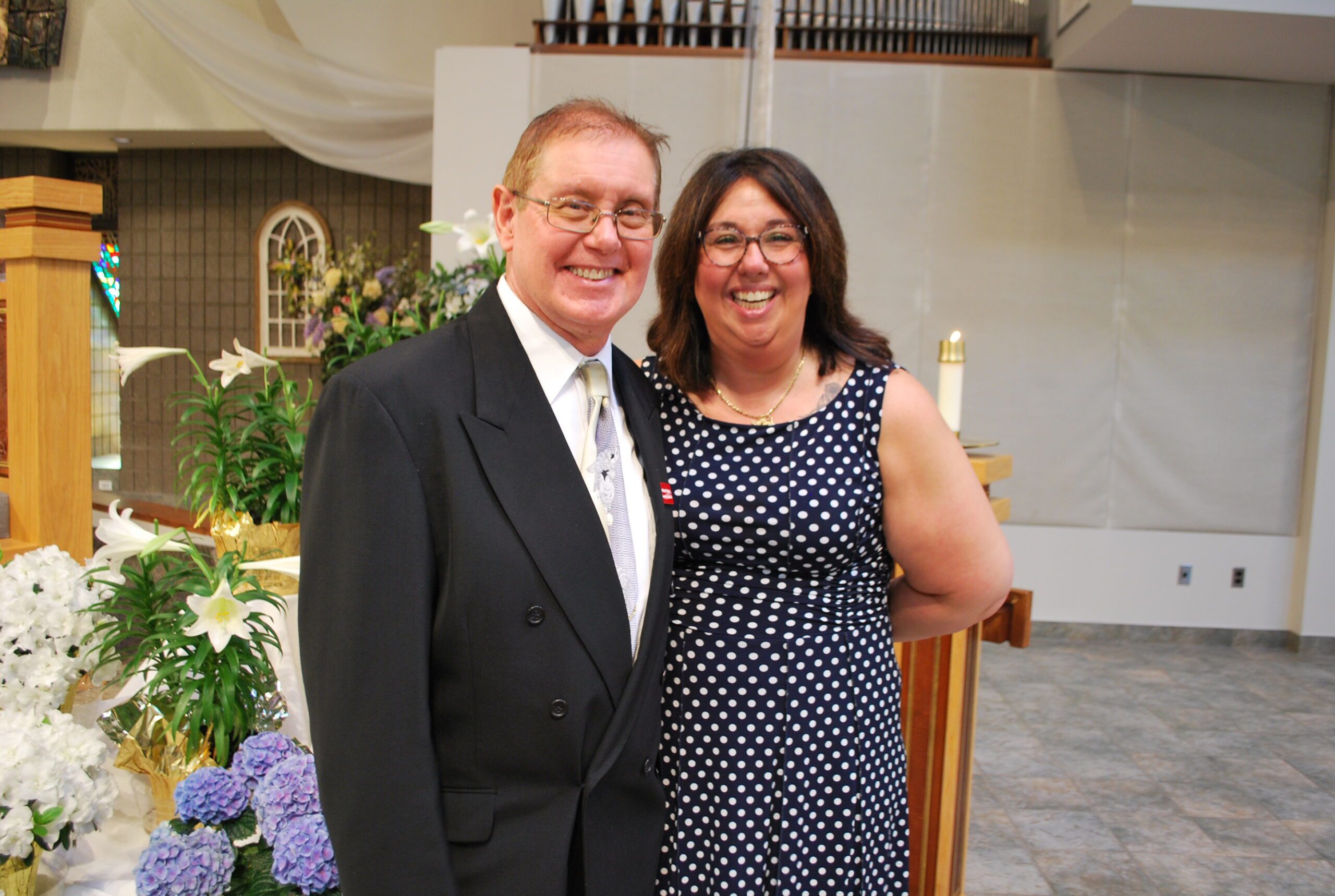
are pictures taken from the First Eucharist program 2004: "Journey with Jesus."
|
| The Eucharist
 |
The Eucharist is the heart and summit of the Church's life, for
in it Christ associates his Church and all her members with his sacrifice of praise
and thanksgiving offered once for all on the cross to his Father; by this sacrifice
he pours out the graces of salvation on his Body which is the Church. |
The Eucharistic celebration always includes the proclamation of the
Word of God; thanksgiving to God the Father for all his befits, above all the
gift of his Son; the consecration of bread and wine; and participation in the
liturgical banquet by receiving the Lord's body and blood. The Eucharist
is the memorial of Christ's Passover, that is, of the work of salvation accomplished
by the life, death, and resurrection of Christ. It is Christ himself acting through
the ministry of the priests, offers the Eucharistic sacrifice. And it is the same
Christ, really present under the species of bread and wine, who is the offering
of the Eucharistic sacrifice. Anyone who desires to receive Christ in Eucharistic
communion must be in a state of grace. Anyone aware of having sinned mortally
must not receive communion without having received absolution in the sacrament
of penance. Communion with the Body and Blood of Christ increases the communicant's
union with the Lord, forgives his venial sins, and preserves him from grave sins.
Since receiving this sacrament strengthens the bonds of charity between the communicant
and Christ, it also reinforces the unity of the Church as the Mystical Body of
Christ. From: Catechism of the Catholic Church for
the United States of America © 1994, United States Catholic Conference, Inc.
and Inside Catholicism: Rituals and Symbols Revealed, by Richard P. McBrien, 1995
|
| Communion Symbols
 |
For generations of Catholic children, First Communion has been
a memorable first encounter with the sacramental presence of Christ. |
- White clothing: The theme of purification in preparation
for the sacrament is reflected in wearing white, the color of purity and innocence.
White is also the color of the baptismal garment.
- The Last
Supper: The Passover seder that Jesus celebrated with his closest followers,
was also the First Communion.
- Holy Communion, because by this
sacrament we unite ourselves to Christ, who makes us sharers in his Body and Blood
to form a single body.
- "Do this in memory of me" asks
us not only to remember but to repeat Jesus' actions and words "until he
comes".
- The Offertory: From the very beginning
Christians have brought, along with the bread and wine for the Eucharist, gifts
to share with those in need. This custom of the collection, ever appropriate,
is inspired by the example of Christ who became poor to make us rich.
- Thanksgiving and praise to the Father: The Eucharist is a sacrifice
of thanksgiving to the Father, a blessing by which the Church expresses her gratitude
to God for all his benefits, for all that he has accomplished through creation,
redemption and sanctification. Eucharist means first of all "thanksgiving."
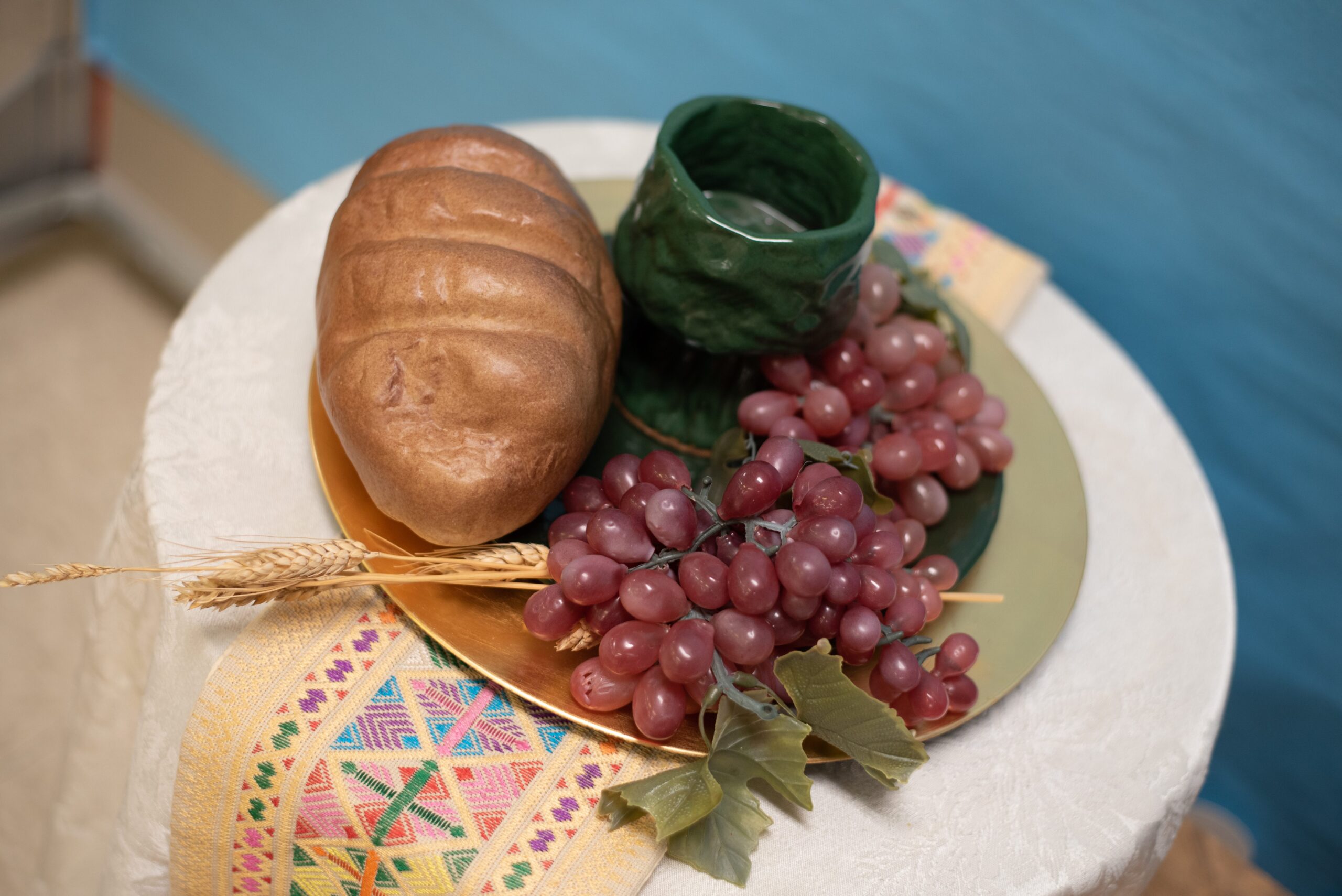
- Bread and Wine: Jesus identified himself with the bread and
wine. About the bread he said "This is my body which will be given up for
you." He called the chalice of wine "The cup of the new and everlasting
covenant."
- Our daily bread is the Word of God. The miracles
of the multiplication of the loaves, when the Lord says the blessing, breaks and
distributes the loaves through his disciples to feed the multitude, prefigure
the superabundance of this unique bread of his Eucharist.
- The sign of
water turned into wine at Cana already announces the Hour of Jesus' glorification.
Wine is the fruit of the vine gifts of the Creator.
- Legends:
Legend tells how the chalice that Christ used at the Last Supper was later used
to catch blood from his wounds while he was crucified. This cup containing the
"essence of immortality" was thought to have been taken to England where
it became the center of Literature of the Holy Grail.
From:
Inside Catholicism: Rituals and Symbols Revealed, by Richard P. McBrien, 1995 |
 |
First Communion History This
is the time of year when many second-graders receive their "first Communion."
But it was not always so... |  |
Until about the 13th century, children were admitted to Communion from
infancy. At baptism, infants were confirmed, and then given the Eucharist - usually
a small amount of the consecrated wine. (The Eastern Rites have continued this
practice down to the present day.) Over the centuries, as disputes arose
over the real presence of Christ in the Eucharist, there developed a trend toward
requiring that children not receive the Eucharist until they had some instruction
in the real presence. In 1215, because Catholics by then received the Eucharist
very infrequently, the Lateran Council decreed that all persons who had reached
"the age of discretion" receive the sacraments of Penance and Eucharist
at least once a year. (This came to be known as "the Easter duty.")
When applied to children, this meant that first Communion was now delayed
until they reached the age when they could have an understanding not only of the
Eucharist, but of sin and forgiveness. This delayed first Communion until the
age of 10, 12, or even 14. Seven centuries later, in 1910 (less than 100
years ago), Pope Pius X decreed that children should be admitted to first Communion
as soon as they could distinguish between the Bread of the Eucharist and ordinary
bread. Thus, first Communion was given at about the age of seven. From
The Little Books by Bishop Ken Untener. | 
Home Contact
Us Sitemap
Search
About Us Stewardship
Faith
Formation Christian
Service Parish
Life Liturgy
Pastoral Services
SacramentsThe web team would love to hear your comments or feedback about this site.
Send your thoughts to: webmaster@stblase.org
St. Blase 12151 E. Fifteen Mile Rd. Sterling
Heights, MI 48312 Phone: (586) 268-2244
Some
images supplied by Creative Teaching. |